Atoms Versus Molecules
Free to teach as-is — the teacher guide, student handout, and slides are included.
Free — we'll email you an access link. Google Docs format.
Objective
I can distinguish between atoms and molecules.
Part 1 of 4
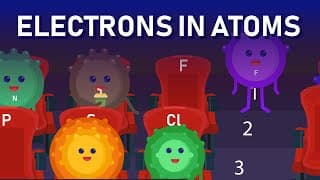
Warm-up video
Tidlybit · 4:06
We don't generate video — this one is by Tidlybit on YouTube. The practice questions and exit ticket below were drafted by AI for this objective, and every question is editable in the teacher guide.
Part 2 of 4
Key concepts
3 concepts
- 1
Atoms are made of three tiny particles called protons, electrons, and neutrons.
- 2
The number of protons in an atom determines what element it is, and this is also known as its atomic number.
- 3
Electrons have a negative electrical charge and are pulled towards the positively charged protons by the electric force.
Part 3 of 4
Practice
3 questions
Name the three tiny particles that make up an atom.
What specific part of an atom determines what element it is, and how does this work?
Part 4 of 4
Exit ticket
Quick comprehension check
“Based on the video, describe what an atom is made of. Include its three main subatomic particles and explain how each particle contributes to the atom's identity or structure.”
Sample answer included in the free materials
Get the materials
Teacher guide, student handout, and slides — free, in Google Docs format
Teacher Guide
Complete lesson plan with answer keys and alternate activities
Student Handout
Printable worksheet
Slides
Ready to present
We'll ask for your email to send your access link — nothing else.
Teaching a group at a different level?
Where are your students right now? We'll rebuild this lesson to match — including the teacher guide, student handout, and slides, saved to your Google Drive.
Adapt This Lesson