Cantidades escalares y vectoriales
Free to teach as-is — the teacher guide, student handout, and slides are included.
Free — we'll email you an access link. Google Docs format.
Objective
Puedo distinguir entre cantidades escalares y vectoriales.
Part 1 of 4
Warm-up video
PluScience · 5:45
We don't generate video — this one is by PluScience on YouTube. The practice questions and exit ticket below were drafted by AI for this objective, and every question is editable in the teacher guide.
Part 2 of 4
Key concepts
3 concepts
- 1
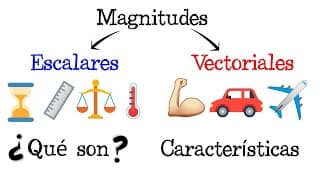
Un escalar es una cantidad que se describe completamente con un solo número y una unidad, sin necesidad de especificar su dirección.
- 2
Para describir un vector por completo, se necesitan tres elementos: magnitud, dirección y sentido.
- 3
La rapidez es un ejemplo de cantidad escalar, mientras que la velocidad es un ejemplo de cantidad vectorial, ya que incluye dirección.
Part 3 of 4
Practice
12 questions
¿Qué es una cantidad escalar y qué información se necesita para describirla completamente?
Menciona los tres elementos que son necesarios para describir completamente una cantidad vectorial.
Part 4 of 4
Exit ticket
Quick comprehension check
“Clasifica cada una de las siguientes cantidades como escalar o vectorial, explicando brevemente por qué: 1. La masa de un objeto es de 10 kg. 2. Un coche viaja a 60 km/h hacia el este. 3. La temperatura ambiente es de 20º C. 4. Un avión vuela a una rapidez de 500 km/h.”
Sample answer included in the free materials
Get the materials
Teacher guide, student handout, and slides — free, in Google Docs format
Teacher Guide
Complete lesson plan with answer keys and alternate activities
Student Handout
Printable worksheet
Slides
Ready to present
We'll ask for your email to send your access link — nothing else.
Teaching a group at a different level?
Where are your students right now? We'll rebuild this lesson to match — including the teacher guide, student handout, and slides, saved to your Google Drive.
Adapt This Lesson