Climate Change and the Water Cycle
Free to teach as-is — the teacher guide, student handout, and slides are included.
Free — we'll email you an access link. Google Docs format.
Objective
I can model the effects of climate change on the water cycle.
Part 1 of 4
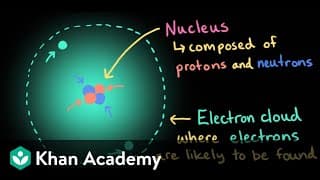
Warm-up video
Khan Academy · 4:27Vetted channel
We don't generate video — this one is by Khan Academy on YouTube. The practice questions and exit ticket below were drafted by AI for this objective, and every question is editable in the teacher guide.
Part 2 of 4
Key concepts
3 concepts
- 1
The water cycle describes how water continuously moves from the ground to the atmosphere and back again, changing between solid, liquid, and gas states.
- 2
Evaporation occurs when the sun heats water and turns it into water vapor, which then rises and cools, leading to condensation and the formation of clouds.
- 3
Water returns to the Earth as precipitation, such as rain or snow, and may follow different paths, including becoming groundwater, part of a glacier, or being absorbed by plant roots for transpiration.
Part 3 of 4
Practice
10 questions
Describe the three states of water and give an example of where each can be found in the water cycle.
Explain the processes of evaporation and condensation in the water cycle. How are they related?
Part 4 of 4
Exit ticket
Quick comprehension check
“Describe one way that climate change can affect the water cycle, based on the information presented in the video.”
Sample answer included in the free materials
Get the materials
Teacher guide, student handout, and slides — free, in Google Docs format
Teacher Guide
Complete lesson plan with answer keys and alternate activities
Student Handout
Printable worksheet
Slides
Ready to present
We'll ask for your email to send your access link — nothing else.
Teaching a group at a different level?
Where are your students right now? We'll rebuild this lesson to match — including the teacher guide, student handout, and slides, saved to your Google Drive.
Adapt This Lesson