Jewish New Year Traditions
Free to teach as-is — the teacher guide, student handout, and slides are included.
Free — we'll email you an access link. Google Docs format.
Objective
I can describe the main traditions and meaning of the Jewish New Year.
Part 1 of 4
Warm-up video
Chabad.org · 4:09
We don't generate video — this one is by Chabad.org on YouTube. The practice questions and exit ticket below were drafted by AI for this objective, and every question is editable in the teacher guide.
Part 2 of 4
Key concepts
3 concepts
- 1
Rosh Hashanah marks the anniversary of the creation of Adam and Eve and is called the "head" of the Jewish year because G‑d renews His sovereignty and allocates the blessings for the coming year.
- 2
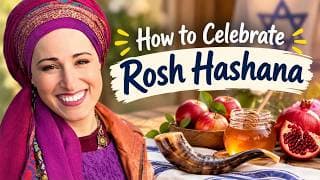
Hearing the shofar, a horn usually made from a ram, is the primary mitzvah of Rosh Hashanah; its blasts wake the soul and help us proclaim G‑d as king.
- 3
Common Rosh Hashanah customs include eating an apple dipped in honey to symbolize a sweet year, and performing Tashlich by a body of water to cast off sins.
Part 3 of 4
Practice
10 questions
Rosh Hashanah is described as the anniversary of what significant event?
What is the primary symbolic reason for eating sweet foods like apples dipped in honey on Rosh Hashanah?
Part 4 of 4
Exit ticket
Quick comprehension check
“Based on the video, describe two main traditions of Rosh Hashanah and explain what each tradition symbolizes or represents regarding the meaning of the Jewish New Year.”
Sample answer included in the free materials
Get the materials
Teacher guide, student handout, and slides — free, in Google Docs format
Teacher Guide
Complete lesson plan with answer keys and alternate activities
Student Handout
Printable worksheet
Slides
Ready to present
We'll ask for your email to send your access link — nothing else.
Teaching a group at a different level?
Where are your students right now? We'll rebuild this lesson to match — including the teacher guide, student handout, and slides, saved to your Google Drive.
Adapt This Lesson