Planetary Motion
Free to teach as-is — the teacher guide, student handout, and slides are included.
Free — we'll email you an access link. Google Docs format.
Objective
I can model the movement of planets in our solar system and describe the patterns I observe.
Part 1 of 3
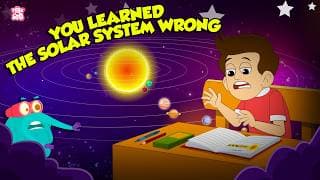
Warm-up video
Unknown Channel · 5:00
We don't generate video — this one is by Unknown Channel on YouTube. The practice questions and exit ticket below were drafted by AI for this objective, and every question is editable in the teacher guide.
Part 2 of 3
Practice
7 questions
Describe Kepler's first law of planetary motion in your own words. What shape are the orbits of planets around the sun?
Explain Kepler's second law. How does a planet's speed change as it moves closer to or farther from the sun?
Part 3 of 3
Exit ticket
Quick comprehension check
“According to Kepler's first law, what is the shape of a planet's orbit around the sun? Describe how the speed of a planet changes as it moves closer to or farther from the sun, according to Kepler's second law. ”
Sample answer included in the free materials
Get the materials
Teacher guide, student handout, and slides — free, in Google Docs format
Teacher Guide
Complete lesson plan with answer keys and alternate activities
Student Handout
Printable worksheet
Slides
Ready to present
We'll ask for your email to send your access link — nothing else.
Teaching a group at a different level?
Where are your students right now? We'll rebuild this lesson to match — including the teacher guide, student handout, and slides, saved to your Google Drive.
Adapt This Lesson