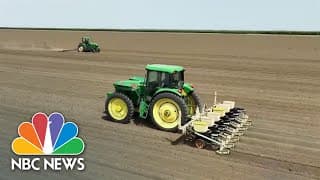
Farming Practices and Crop Yield
Free to teach as-is — the teacher guide, student handout, and slides are included.
Free — we'll email you an access link. Google Docs format.
Objective
I can evaluate the impact of different farming practices on crop yield and sustainability.
Part 1 of 4
Warm-up video
TED-Ed · 7:10Vetted channel
We don't generate video — this one is by TED-Ed on YouTube. The practice questions and exit ticket below were drafted by AI for this objective, and every question is editable in the teacher guide.
Part 2 of 4
Key concepts
3 concepts
- 1
The first agricultural revolution led to civilization but at the expense of forests, wildlife, water, and a stable climate.
- 2
Future farms will use technologies like drones, sensors, and robots to increase output while protecting biodiversity and conserving water.
- 3
To revolutionize farming, we need both high-tech interventions and lower-cost methods, along with a shift toward plant-based diets and reductions in food loss and waste.
Part 3 of 4
Practice
12 questions
What was the primary characteristic of the first agricultural revolution, as described in the video?
Explain why expanding agricultural lands is not a viable solution for future food production.
Part 4 of 4
Exit ticket
Quick comprehension check
“Describe two different farming practices discussed in the video and explain how each impacts both crop yield and sustainability.”
Sample answer included in the free materials
Get the materials
Teacher guide, student handout, and slides — free, in Google Docs format
Teacher Guide
Complete lesson plan with answer keys and alternate activities
Student Handout
Printable worksheet
Slides
Ready to present
We'll ask for your email to send your access link — nothing else.
Teaching a group at a different level?
Where are your students right now? We'll rebuild this lesson to match — including the teacher guide, student handout, and slides, saved to your Google Drive.
Adapt This Lesson