Interpreting Gel Electrophoresis
Free to teach as-is — the teacher guide, student handout, and slides are included.
Free — we'll email you an access link. Google Docs format.
Objective
I can interpret gel electrophoresis results to draw conclusions about DNA samples.
Part 1 of 4
Warm-up video
Amoeba Sisters · 7:55Vetted channel
We don't generate video — this one is by Amoeba Sisters on YouTube. The practice questions and exit ticket below were drafted by AI for this objective, and every question is editable in the teacher guide.
Part 2 of 4
Key concepts
3 concepts
- 1
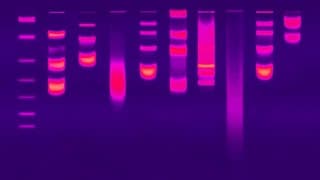
Gel electrophoresis separates molecules, especially DNA, based on their size and charge.
- 2
Restriction enzymes are used to cut DNA into fragments at specific sequences, and these fragments are then loaded into the wells of the gel.
- 3
DNA bands can be compared to a DNA ladder, which contains fragments of known sizes, to estimate the size of unknown DNA fragments and determine relatedness between samples.
Part 3 of 4
Practice
11 questions
What property of DNA allows it to be separated using gel electrophoresis?
Explain the role of restriction enzymes in preparing DNA samples for gel electrophoresis.
Part 4 of 4
Exit ticket
Quick comprehension check
“A gel electrophoresis is run on four DNA samples. Sample 1, Sample 2, and Sample 3 are from different individuals. Sample 4 is a DNA ladder with known fragment sizes. After running the gel, the banding patterns for Samples 1 and 3 appear most similar. What can you conclude about the relationship between the individuals who provided Sample 1 and Sample 3?”
Sample answer included in the free materials
Get the materials
Teacher guide, student handout, and slides — free, in Google Docs format
Teacher Guide
Complete lesson plan with answer keys and alternate activities
Student Handout
Printable worksheet
Slides
Ready to present
We'll ask for your email to send your access link — nothing else.
Teaching a group at a different level?
Where are your students right now? We'll rebuild this lesson to match — including the teacher guide, student handout, and slides, saved to your Google Drive.
Adapt This Lesson